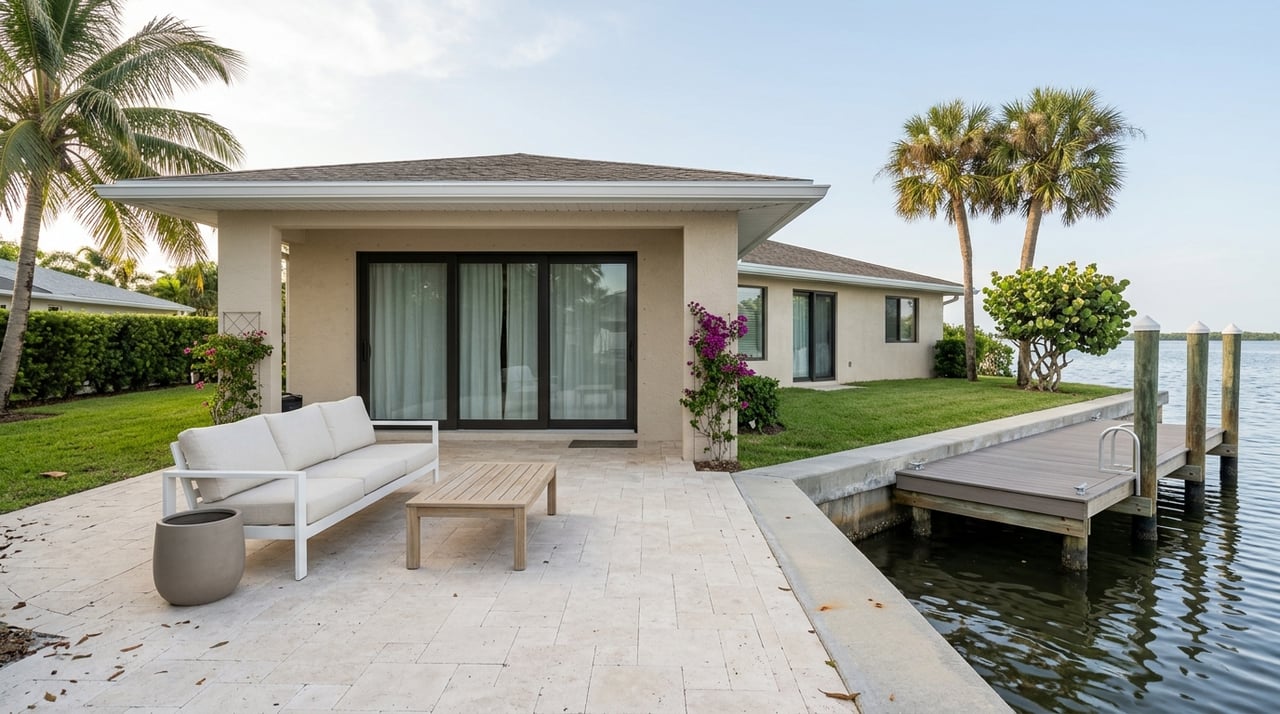
How To Choose A Boat Friendly Home In North Palm Beach
May 7, 2026
May 7, 2026
If you picture a boat-friendly home as any waterfront house with a dock, North Palm Beach can surprise you. A property may look perfect from the backyard and still be a poor fit for your boat, your storage needs, or your plans for easy days on the water. If you want to buy smart, you need to look beyond the shoreline and focus on route, clearance, storage, and local rules. Let’s dive in.
When you search for a boat-friendly home in North Palm Beach, the first question is not just where the home sits. It is how your boat gets from that property to open water. In this area, that route can matter as much as the home itself.
North Palm Beach appeals to boating buyers because it sits between the Intracoastal Waterway, the Atlantic Ocean, and Lake Worth. The village also has an active Marine Unit that handles boating safety, speed enforcement, and manatee-zone enforcement on local waterways. That means boating is a visible part of daily life here, but it also means local waterways are actively regulated.
NOAA identifies its electronic navigational charts as the primary nautical chart product, and its Coast Pilot includes details like channel descriptions, bridge and cable clearances, currents, tides, water levels, and small-craft facility information. For you as a buyer, that means it is not enough to confirm that a home has water frontage. You also need to confirm that your boat’s draft and air draft work for the route you would actually travel.
Bridge clearance is one of the biggest filters for boaters in this part of Palm Beach County. In the nearby Intracoastal corridor, NOAA lists the Donald Ross Road bridge at 35 feet, PGA Boulevard at 24 feet, and the U.S. 1 Parker Bridge at 25 feet. Farther south along the Lake Worth section, low bascule bridges include Flagler Memorial at 24 feet and Royal Park at 21 feet.
If your boat sits close to those published clearances, a home that seems ideal on paper may be much less practical in real life. This is especially important for sailboats and other taller vessels. In many cases, the route to open water can limit your options more than the lot itself.
A nearby marina can give you a useful benchmark. Safe Harbor North Palm Beach is described as a sheltered harbor about a mile from Palm Beach Inlet, with wet slips for boats from 20 to 120 feet, a maximum height of 64 feet, and a maximum draft of 9 feet.
That does not mean every home can handle those same dimensions. It does, however, show you the type of boating infrastructure available nearby. If a private dock setup feels restrictive because of bridge clearances or water depth, a marina slip may be the more practical option.
In North Palm Beach, boat access usually falls into three general categories. You may find a home with a private dock, a property tied to a neighborhood or village marina slip, or a home where a larger full-service marina is the best fit.
Each option comes with tradeoffs. A private dock can be convenient, but the setup, placement, and legality of that marine improvement matter. A marina slip may offer easier access or fewer at-home storage issues, but it may change how you use your boat day to day.
North Palm Beach code treats docks, seawalls, boatlifts, boathouses, and related waterfront structures as regulated marine improvements. That is important because it tells you the waterfront configuration is not just cosmetic. The physical layout, setbacks, and placement rules can directly affect how the property functions for your boat.
The village code summary states that docks generally may extend up to 5 feet waterward from the rear property line. Floating docks in the North Palm Beach Waterway may extend up to 10 feet waterward, but anything beyond loading and unloading has limits on mooring use. The same code summary also shows that rules can vary by water body.
For you, this means a listing photo is only the starting point. You want to know whether the current setup matches village rules and whether it supports the way you plan to use the boat.
Anchorage Park Marina is a key village-run boating resource to know. The village says it offers a resident-only boat ramp, trailer parking, a washing station, and resident-only dry and wet boat storage. It also has two day docks, though overnight stays are not allowed in those day slips.
If you are comparing homes, this kind of access can add flexibility. A property without a large private dock may still work well if village marina access supports your boating routine.
Many buyers focus on water access first and think about storage later. In North Palm Beach, that can be a mistake. If you plan to keep a trailered boat at home, the storage rules deserve early attention.
The village’s boat and RV ordinance states that boats and RVs stored on residential properties must be properly licensed and visually screened from abutting properties, streets, and alleyways. The ordinance also includes registration and special-exception procedures.
That means a home can be waterfront and still not fit your needs if you want visible driveway storage or easy trailer parking. Lot width, side-yard space, and screening potential may be just as important as a water view.
Village code is only part of the picture. If the home is in a condo, HOA, or marina community, the association may impose additional limits on trailer storage, boat size, guest docking, or dock use.
Palm Beach County’s marine-structure checklist specifically calls for HOA approval when work is proposed in a common area. So before you buy, make sure you review association documents carefully if any part of your boating plan depends on community property or shared access.
A boat-friendly home should not only look usable. Its dock, lift, seawall, or marina arrangement should also be properly permitted.
Palm Beach County’s marine-structure checklist states that docks, seawalls, boatlifts, boathouses, and similar marine projects may require approvals from multiple agencies depending on the project. The checklist specifically notes that reviewers may include the Florida Department of Environmental Protection, the Florida Inland Navigational District, and the Army Corps of Engineers. It also notes that HOA approval may be required for work in common areas.
If a seller added or modified a marine structure without the right approvals, you could inherit delays, added expense, or limits on future use. This is why permit review should be part of your standard due diligence, not an afterthought.
When you evaluate a waterfront home, it helps to ask focused questions such as:
Clear answers can save you from buying a home that works better in photos than in practice.
Flood exposure is part of the same review process. Palm Beach County states that its municipalities participate in the National Flood Insurance Program, and development in the 100-year floodplain requires permits. The county also states that construction or improvements in flood-prone areas must minimize flood damage.
Just as important, the county warns that unpermitted development can affect flood-insurance eligibility. If you are buying a boat-friendly property with waterfront improvements, that is a detail worth taking seriously before closing.
This does not mean every waterfront home is a problem. It means you should confirm that improvements were handled properly and that the property’s flood-related requirements are clearly understood during your due diligence period.
The right boat-friendly home in North Palm Beach depends on more than a scenic lot. Some buyers want a private dock steps from the back door. Others may be better served by marina storage, a resident boat ramp, or a property that makes trailer storage easier.
If your boat is taller, deeper, or harder to trailer, route planning and bridge clearance may be the deciding factor. If you want to keep a boat at home, storage screening rules and lot layout may matter more. And if you hope to improve the waterfront later, permits and approvals should move to the top of your checklist.
In short, the best boating home is the one that fits how you actually use your boat. When you line up the route, the structure, the storage, and the rules, you can buy with much more confidence.
If you want expert guidance as you compare waterfront options in North Palm Beach and across Palm Beach County, The Homeseeker Group can help you evaluate the details that matter most and find a home that supports the lifestyle you want.
Stay up to date on the latest real estate trends.
We’re more than agents—we’re local advocates, expert negotiators, and relentless problem-solvers. Let’s bring your real estate vision to life, together.