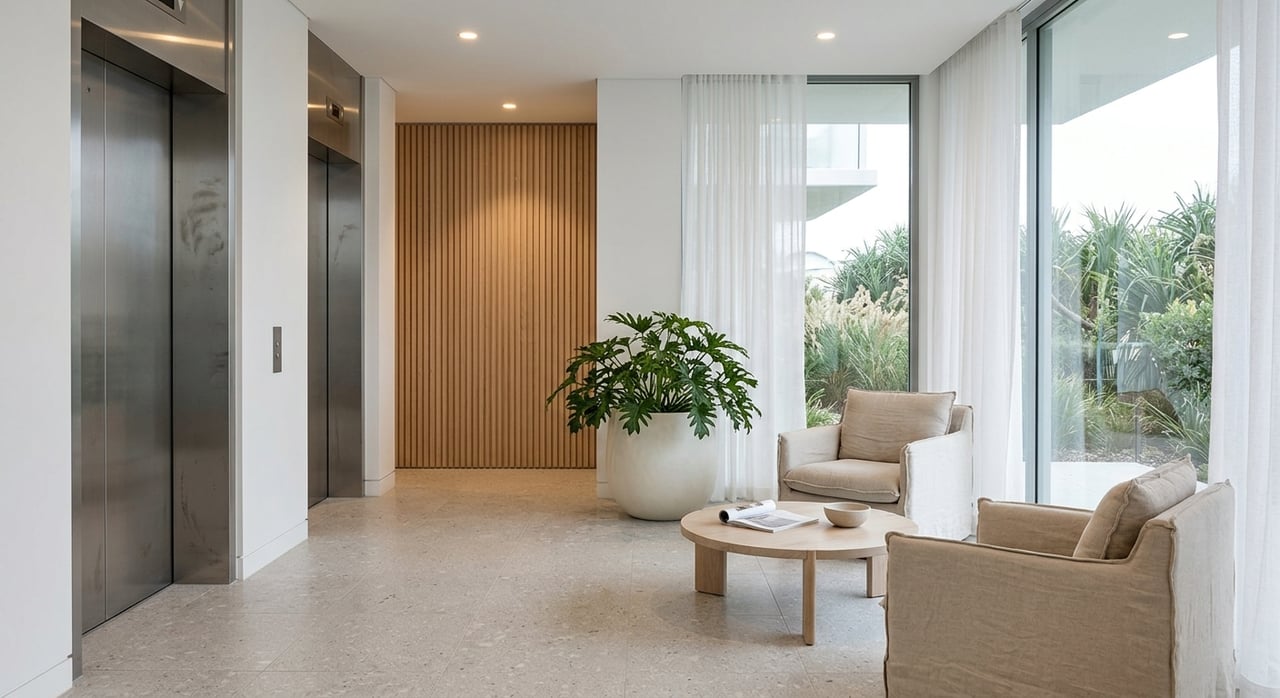
Highland Beach Condo HOA Rules, Fees, and Buyer Tips
June 4, 2026
June 4, 2026
Trying to budget for a condo in Highland Beach? The monthly fee on a listing is only part of the story. If you are comparing oceanfront and Intracoastal properties, or weighing one building’s rules against another’s, it helps to know what those fees may cover and how Florida condo rules work. This guide will walk you through the big pieces so you can ask sharper questions and make a more confident move. Let’s dive in.
Highland Beach has a unique setting. The town sits on a barrier island in southern Palm Beach County, with the Atlantic Ocean on one side and the Intracoastal Waterway on the other. It is also largely residential and substantially built out, which means many buyers are choosing among existing condo communities rather than brand-new large-scale neighborhoods.
That location matters because waterfront exposure can affect long-term building costs. Coastal properties may face storm surge, wave action, erosion, and flood-related risks. In practical terms, two condos that look similar on paper may have very different maintenance and reserve needs depending on where the building sits and how exposed it is.
Before you focus on the fee amount, confirm what type of association governs the property. In Florida, condominium associations are usually governed by Chapter 718, while true homeowners’ associations are generally governed by Chapter 720. Some properties may also have a condominium structure plus a master association, which can mean more than one fee.
That is one reason a listing can show a monthly number that seems straightforward but turns out to include multiple layers. If you are buying in Highland Beach, it is smart to ask whether the property is part of a condo association only, a master association only, or both.
Under Florida law, condo assessments are each owner’s share of the funds needed for common expenses. Those common expenses can include operating, maintaining, repairing, replacing, and protecting common elements and association property. The exact details depend on the declaration, bylaws, and budget for that building.
In many communities, condo fees may also include items such as:
This is why one Highland Beach condo may have a lower monthly fee than another. A simpler building with fewer services may carry a smaller operating budget, while a full-service tower with more amenities and larger maintenance demands may have higher monthly dues.
In Highland Beach, the difference between oceanfront and Intracoastal living is not just about the view. Building exposure can influence upkeep, repair schedules, and inspection needs. Oceanfront structures are often more exposed to wind, salt air, storm surge, and erosion than less exposed buildings.
Florida law also allows local enforcement agencies to require earlier milestone inspections when environmental conditions, including proximity to salt water, justify it. That does not mean every oceanfront building will automatically cost more, but it helps explain why some coastal buildings may carry higher dues or face larger future repair obligations.
A low monthly fee can look appealing at first glance. Still, it is important to ask whether the association has enough reserve funding and whether any special assessments are current or proposed. In many cases, the better question is not just “What are the dues?” but “What are the dues paying for, and what still needs to be paid later?”
Florida law allows associations to fund reserves through regular assessments, special assessments, lines of credit, or loans. For budgets adopted on or after December 31, 2024, unit-owner-controlled associations that are required to obtain a structural integrity reserve study may not waive or underfund the required reserve items.
Those required reserve items can include major building components such as:
For buyers, this means reserve health is a major part of affordability. A building with stronger reserves may have higher regular dues but fewer surprise costs. A building with lower dues may still face a significant assessment if major work is needed.
Every condo community has its own governing documents. Even so, there are a few rule categories that buyers commonly run into when shopping in Highland Beach.
Condo declarations and bylaws can regulate how units are used and what owners can change. If you are planning to remodel a kitchen, replace flooring, move plumbing, or upgrade windows and doors, you will want to know what approvals are required before work begins.
Florida law also addresses major changes involving common elements or association property. If the governing documents do not spell out an approval process, 75% of the total voting interests must approve the alteration before work starts. Boards must also adopt hurricane-protection specifications, and they may not refuse a compliant installation or replacement that matches those specifications.
Pet rules are usually set by the condo declaration, bylaws, and current rules. That means one building may allow pets with limits on number, size, or type, while another may be more restrictive. You should always review the current documents instead of relying on an old listing note or verbal summary.
Assistance animals are treated separately under fair housing law. A no-pets policy does not automatically settle a request involving a service animal or emotional support animal related to a disability. This is one more reason to look closely at how the building’s rules are written and applied.
If you plan to rent out the condo now or later, this area deserves special attention. Rental policies are association-specific and may include minimum lease terms, approval requirements, or limits on the number of rentals allowed in the building.
Florida law also places limits on retroactive rental restrictions. An amendment that prohibits renting, changes rental terms, or limits the number of rentals applies only to owners who consented to it and to owners who take title after the amendment becomes effective.
Condo associations may levy reasonable fines for violations of the declaration, bylaws, or reasonable rules. They may also suspend a unit owner’s or tenant’s right to use common elements, common facilities, or other association property in certain situations.
Florida law caps fines at $100 per violation or $1,000 in the aggregate, and it requires 14 days’ written notice plus a committee hearing before most fines or suspensions are imposed. If an owner is more than 90 days delinquent, the association may suspend use rights until the debt is paid.
If you are serious about a Highland Beach condo, document review is essential. This is especially true in older coastal buildings, where inspections, reserve planning, and deferred maintenance can have a major effect on your ownership costs.
Ask for and review these records before closing:
Florida law requires associations to maintain official records and make them available for inspection within 10 working days after a written request. Most records must be kept for at least 7 years, while structural integrity reserve studies must be kept for at least 15 years.
For older buildings in Highland Beach, milestone inspections deserve close attention. Under Florida law, buildings that are three habitable stories or more must have a milestone inspection by the year they turn 30 and every 10 years after that. If local conditions such as proximity to salt water justify it, the first inspection can be required at 25 years.
The association is responsible for arranging the inspection and paying the costs tied to the portions of the building it must maintain under its governing documents. For you as a buyer, the key question is simple: has the building completed the required inspections, and what work followed from those findings?
When you are comparing Highland Beach properties, these questions can help you move beyond the headline monthly fee:
These answers can give you a much clearer picture of the real cost of ownership and whether a building fits your plans.
In Highland Beach, condo fees and HOA-style rules are not one-size-fits-all. A building’s location, exposure, age, reserves, inspection schedule, and governing documents can all shape what you pay and how you can use the property. Looking only at the monthly dues can lead you to miss the bigger financial picture.
If you want help comparing Highland Beach condos, reviewing the practical differences between buildings, and narrowing down options that fit your goals, connect with The Homeseeker Group. A clear, local strategy can make your search much easier.
Stay up to date on the latest real estate trends.

We’re more than agents—we’re local advocates, expert negotiators, and relentless problem-solvers. Let’s bring your real estate vision to life, together.