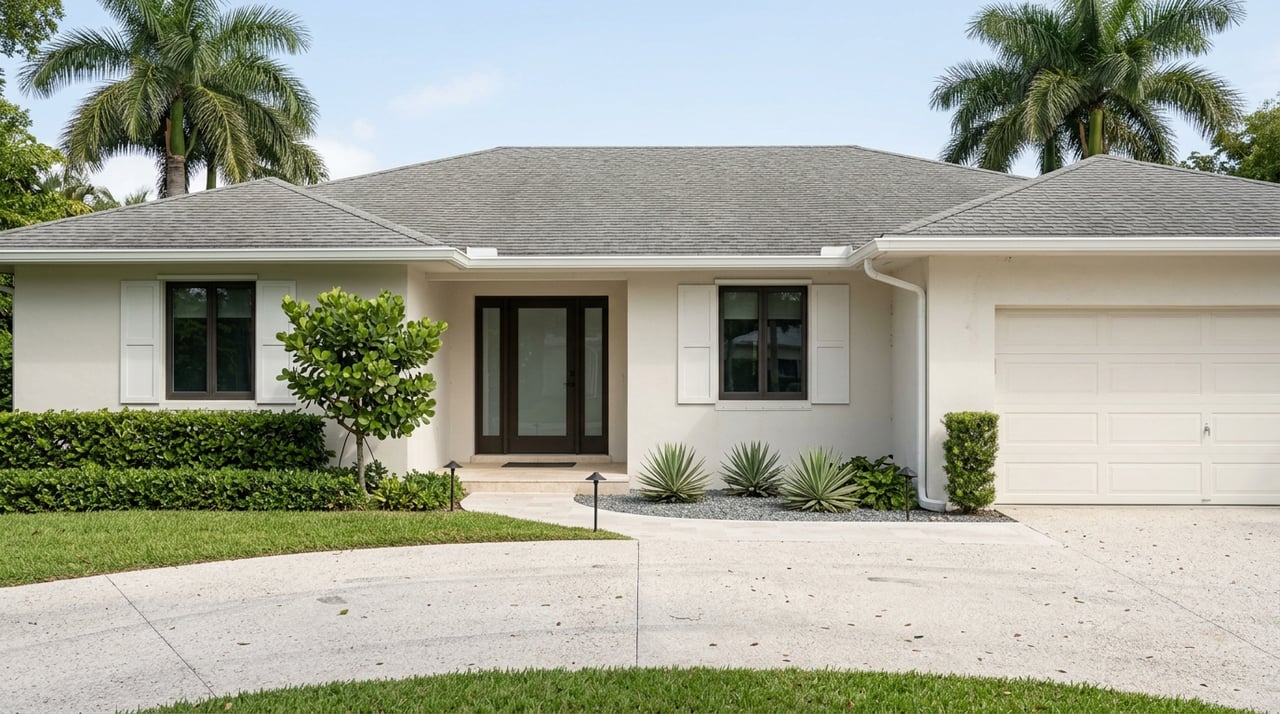
What To Know Before Buying A Luxury Estate In Manalapan
May 14, 2026
May 14, 2026
Buying in Manalapan is not like buying in most luxury markets. Inventory is tiny, public data can look inconsistent from one website to the next, and the wrong assumption about flood risk, renovation rules, or carrying costs can turn an exciting purchase into a frustrating one. If you are considering a luxury estate here, you need more than a beautiful showing and a strong offer strategy. You need a clear plan for due diligence, timing, and local logistics. Let’s dive in.
Manalapan is a very small, low-density coastal town with a limited number of homes and very little commercial land. The town’s history notes about 406 year-round residents and roughly 495 residents when seasonal or other non-resident homeowners are included. That small footprint helps explain why the market often feels private and relationship-driven.
It also helps explain why online market snapshots can seem confusing. In March 2026, Realtor.com reported 26 homes for sale with a median listing price of $19.5 million and a median 104 days on market, while Redfin showed a median sale price of $51.7 million, 62 days on market, and only 3 homes sold. Zillow showed 7 homes for sale as of March 31, 2026. In a market this thin, a few listings or sales can shift the numbers quickly.
You should treat public market data as a starting point, not the full story. In Manalapan, a handful of transactions can distort averages, and the difference between asking price and closed price may reflect unique property features, seller timing, or deal structure.
This is also why private opportunities may matter. Based on the town’s small, seasonal owner base and the limited number of publicly available listings, quiet outreach and local relationships may surface opportunities that never become widely visible online.
In luxury markets, your purchase price is only part of the decision. Palm Beach County’s 2025 final tax roll shows Manalapan’s final taxable value at $2.420 billion, up 7.57% year over year. That makes property taxes and overall carrying costs an important part of your early planning.
You will also want to think through post-closing administration. The Palm Beach County Tax Collector says property tax bills are mailed by November 1, with payments due from November 1 through March 31, and delinquency beginning April 1. Early-payment discounts are available from November through February, so address updates, escrow planning, and prorations should be discussed before closing, not after.
Before you move too far into negotiations, it helps to review:
In Manalapan, flood diligence is not optional. The town says it is especially vulnerable to flooding because it is surrounded by water and can be affected by Atlantic and Intracoastal storm surge, tropical systems, king tides, and erosion. That coastal setting is part of the appeal, but it also requires a more careful review before you commit.
The town can provide important property-specific information, including flood zone, whether mandatory flood insurance applies, whether an elevation certificate is on file, and whether the property is in a CHHA, CBRS, or LiMWA area. That is valuable information to request early in the process.
Many buyers are surprised by this point. FEMA states that most homeowners insurance policies do not cover flood damage, and FloodSmart says flood insurance is required when a buyer has a government-backed mortgage on a home in a Special Flood Hazard Area.
Manalapan also says it participates in the Community Rating System, which it says provides a 10% discount on flood insurance policies in town. That can help, but it does not replace the need to confirm the actual insurance picture for the specific property you want to buy.
Before your offer becomes firm, ask for:
A luxury waterfront estate deserves more than a standard walk-through. In a coastal setting like Manalapan, the exterior condition of the home may carry major cost and timing implications. Roof systems, impact protection, site drainage, and seawall condition can all affect your decision.
The town’s flood and permit requirements also show why site conditions matter. Surveys, site plans, drainage details, and flood-zone documentation are part of the local review framework for many projects. If you are buying a property with plans to improve or rework the exterior, you want to understand those conditions before closing.
A general home inspection is important, but it may not be enough for a luxury estate in Manalapan. Based on the town’s residential permit checklist, buyers often benefit from coordinating a broader group of professionals during due diligence.
That may include:
This sequencing is not a published town rule, but it is a practical response to the town’s permit and approval requirements and can help you spot issues before closing.
If you are buying with plans to remodel, expand, restyle, or redesign the exterior, do your homework early. In Manalapan, exterior changes are tightly controlled. The town states that any exterior change to a residence must first receive Architectural Commission approval.
That includes additions, alterations, shutters, fences, exterior paint color, roof tile changes, landscaping, and seawall work. In other words, even projects that may seem cosmetic can trigger review.
The Architectural Design Guidelines say review considers compatibility with neighboring properties, building openings and privacy, lighting glare, rooflines, and material quality. That means your design goals may need adjustment based on local standards.
If your vision includes a new facade, revised landscaping, pool work, seawall improvements, or a bold exterior palette, confirm the approval path before you close. It is much easier to learn what is feasible during due diligence than after you own the property.
If you hope to begin work soon after closing, local permit logistics matter. The town’s residential permit checklist shows that many projects may require a current survey, site plan, construction documents, roof material worksheets, product approvals, energy calculations, and, in some cases, an elevation certificate or Zone V design certificate.
The permit application also notes that separate permits may be required for items such as electrical, plumbing, wells, pools, furnaces, tanks, and air conditioners. The building department says next-day inspections must be scheduled before 4:00 p.m., and a business registration is required before work begins in town.
If you are purchasing a home with plans for immediate improvements, these details can affect your move-in schedule. Permit sequencing, contractor registration, and inspection timing can all influence when work can realistically begin.
This is one reason local representation matters in a market like Manalapan. You want someone who can help you think through the timing, the right due diligence questions, and the practical order of next steps.
In a town this small, the details matter. Inventory can be limited, public data can swing sharply, and property-specific issues like flood status, seawall condition, insurance availability, and ARCOM review can all shape whether a purchase is truly the right fit.
That does not mean buying in Manalapan is harder than buying elsewhere. It means the process benefits from a more tailored approach. When you combine smart financial planning, early flood and exterior due diligence, and a realistic understanding of local approval requirements, you can move forward with much more confidence.
If you are considering a luxury estate purchase in Manalapan, The Homeseeker Group can help you evaluate the opportunity, coordinate a thoughtful buying strategy, and navigate the process with local insight and high-touch support.
Stay up to date on the latest real estate trends.
We’re more than agents—we’re local advocates, expert negotiators, and relentless problem-solvers. Let’s bring your real estate vision to life, together.